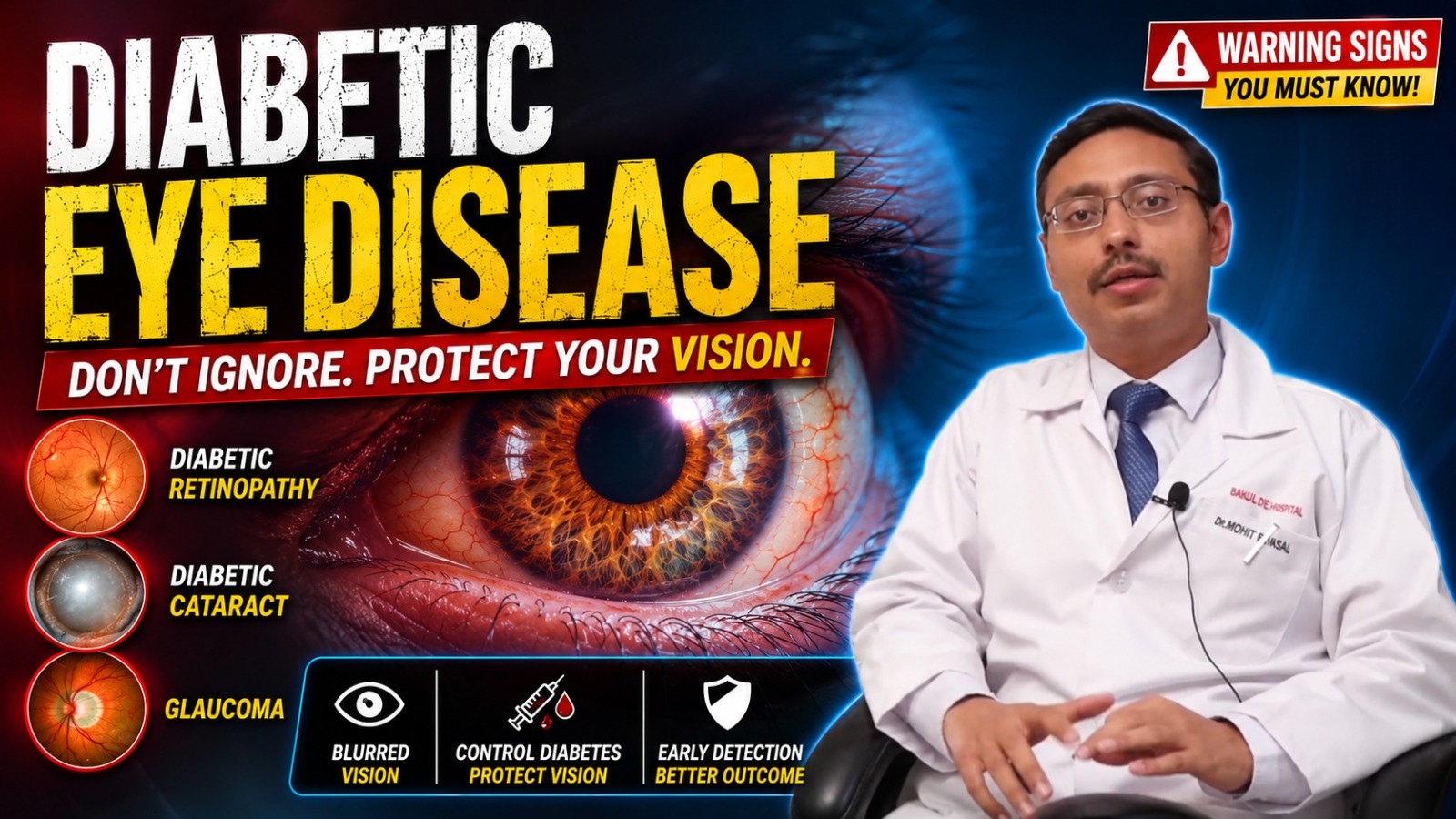
Understanding Diabetic Eye Disease
Diabetes is the leading cause of preventable blindness in the working-age population worldwide. High blood sugar levels damage the delicate blood vessels of the retina over time — a condition called Diabetic Retinopathy. What makes it especially dangerous is that it has no symptoms in its early stages. By the time vision is affected, significant damage may already have occurred.
Every person with Type 1 or Type 2 diabetes — regardless of how well-controlled — is at risk. The longer you have had diabetes, the higher the risk. This is why annual dilated retinal examination is mandatory for all diabetic patients.
Conditions We Treat
- Non-Proliferative Diabetic Retinopathy (NPDR): Early stage — microaneurysms, haemorrhages, cotton wool spots. May need monitoring or laser.
- Proliferative Diabetic Retinopathy (PDR): Advanced stage — new abnormal vessels grow (neovascularisation), risking vitreous haemorrhage and tractional detachment.
- Diabetic Macular Oedema (DMO): Fluid accumulation in the macula causing central vision blurring — the most common cause of vision loss in diabetes.
- Vitreous Haemorrhage: Bleeding from new fragile vessels into the vitreous cavity.
- Tractional Retinal Detachment: Scar tissue pulling the retina — requires vitrectomy surgery.
- Neovascular Glaucoma: Abnormal vessel growth in the drainage angle — very aggressive and difficult to treat.
Treatment Options
- Optimise Systemic Control: Best HbA1c, BP and lipids — slows retinopathy progression significantly.
- Intravitreal Anti-VEGF Injections: Ranibizumab (Lucentis), Bevacizumab (Avastin) or Aflibercept (Eylea) for DMO and PDR.
- Macular Laser (Focal/Grid): For clinically significant macular oedema.
- Panretinal Photocoagulation (PRP): Scatter laser for proliferative disease — reduces oxygen demand and regression of new vessels.
- Intravitreal Steroids: For persistent, refractory macular oedema.
- Vitrectomy Surgery: For vitreous haemorrhage not clearing, tractional detachment and severe PDR.
Our Diagnostic Services
- Dilated fundus examination with 90D and indirect ophthalmoscopy
- Optical Coherence Tomography (OCT) — cross-sectional retinal imaging to detect and quantify macular oedema
- OCT-Angiography — non-invasive retinal vasculature mapping
- Fluorescein Angiography (FFA) — leakage and ischaemia mapping
- Ultrasonography — for vitreous haemorrhage when fundus not visible
Who Needs Annual Eye Screening?
- All Type 1 diabetics from 5 years after diagnosis
- All Type 2 diabetics from time of diagnosis
- Pregnant diabetic patients — every trimester
- Patients with poor blood sugar control (HbA1c above 8%)
- Hypertensive diabetic patients — higher risk
Frequently Asked Questions
I have diabetes but my vision is fine. Do I still need an eye check? ▾
Absolutely yes. Diabetic retinopathy has no symptoms in early stages. By the time you notice vision changes, significant irreversible damage may have already occurred. Annual screening allows us to detect and treat changes before they cause vision loss.
Can diabetic eye disease be reversed? ▾
Early to moderate diabetic retinopathy can be significantly stabilised or partially improved with good blood sugar control and appropriate treatment. Advanced changes like PDR and traction are harder to reverse. This is why early detection is so critical.
How often will I need injections? ▾
Typically a loading phase of 3 monthly injections, then maintenance injections every 4–12 weeks depending on your response assessed by OCT. Treatment is tailored — some patients achieve lasting control with fewer injections over time.
Is retinal laser treatment painful? ▾
Macular laser may cause mild discomfort. PRP (panretinal laser) can cause mild aching during the procedure. We use topical anaesthetic drops and perform treatment in staged sessions to keep you comfortable throughout.
Consult Our Expert Today
Book a consultation with Dr. VK Bansal at Bansal Eye Hospital, Ambala.