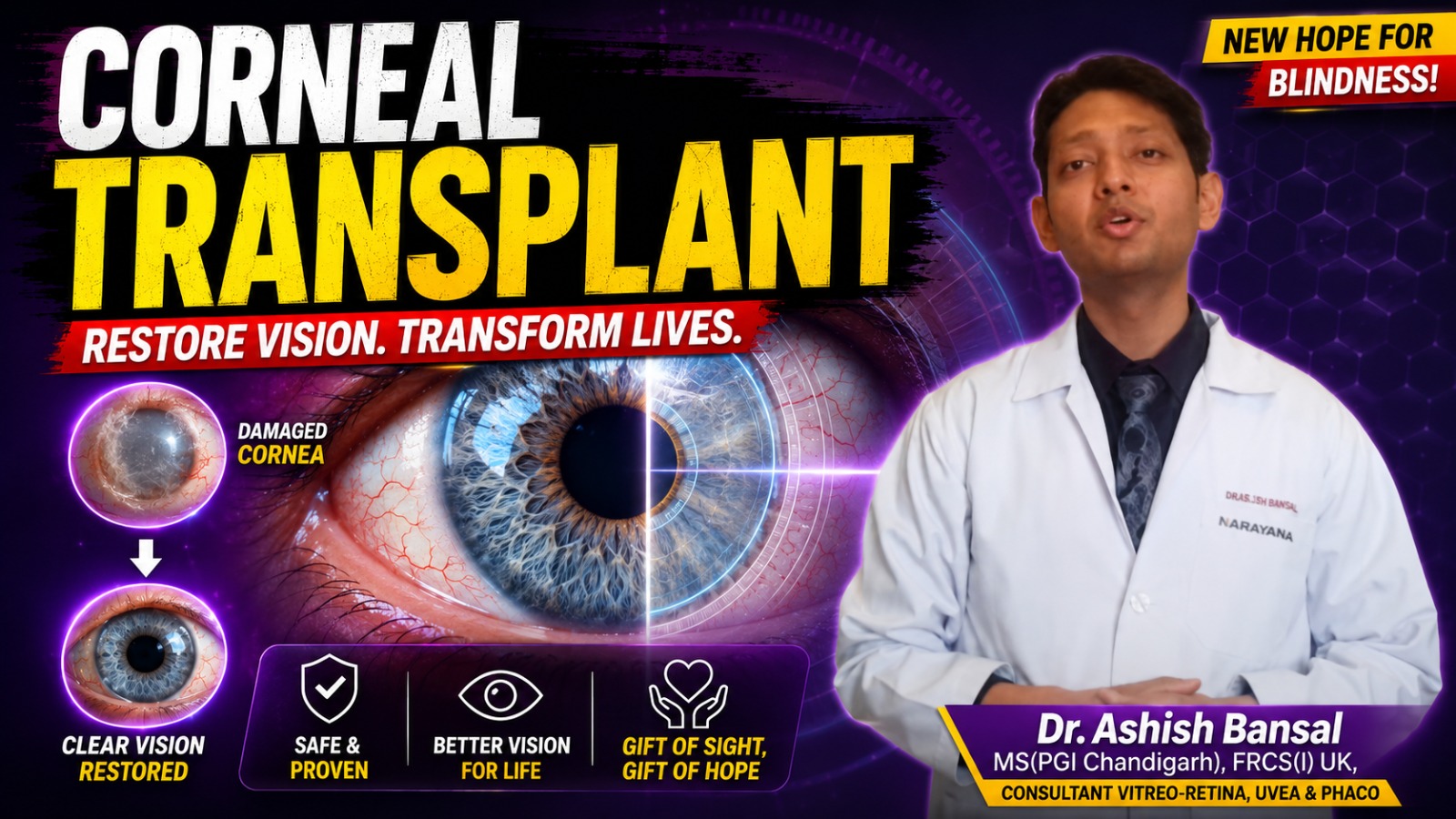
What is Corneal Transplant Surgery?
A corneal transplant (keratoplasty) replaces a diseased, scarred or deformed cornea with a healthy donor cornea, restoring transparency and vision. At Bansal Eye Hospital, we perform the full range of corneal transplant procedures — from selective lamellar techniques (DALK, DSAEK) to full-thickness penetrating keratoplasty (PKP).
Types of Corneal Transplants We Perform
- DALK (Deep Anterior Lamellar Keratoplasty): Replaces all layers of the cornea except the innermost endothelium. Preferred for keratoconus and stromal scars — lower rejection risk, faster recovery.
- DSAEK (Descemet's Stripping Automated Endothelial Keratoplasty): Replaces only the diseased endothelial layer. Ideal for Fuchs' dystrophy and bullous keratopathy. Faster recovery than full transplant.
- DMEK (Descemet's Membrane Endothelial Keratoplasty): Ultra-thin endothelial transplant for superior visual outcomes in endothelial diseases.
- PKP (Penetrating Keratoplasty): Full-thickness transplant for severe scarring, advanced keratoconus or failed previous grafts.
Conditions Requiring Corneal Transplant
- Advanced keratoconus not manageable with C3R or contact lenses
- Corneal scarring from infections (bacterial, fungal, viral)
- Fuchs' corneal dystrophy and other hereditary dystrophies
- Bullous keratopathy (corneal oedema after cataract surgery)
- Corneal burns (chemical or thermal injury)
- Failed previous corneal grafts
The Transplant Procedure
- Donor Cornea: Carefully screened, quality-tested donor tissue obtained from licensed eye banks across India.
- Anaesthesia: Either local (peribulbar block) or general anaesthesia depending on patient age and preference.
- Host Tissue Removal: Diseased corneal layers are carefully excised using precision instruments and trephines.
- Donor Tissue Preparation: The donor cornea is prepared to the required size and thickness for the specific procedure.
- Suturing: For PKP/DALK, interrupted and/or running sutures secure the graft. DSAEK and DMEK use an air bubble for attachment.
- Post-operative Care: Steroid eye drops long-term to prevent rejection. Regular follow-up for suture removal and refraction.
Who Needs Corneal Transplant?
- Patients with corneal blindness in one or both eyes
- Advanced keratoconus with poor contact lens tolerance
- Corneal dystrophies causing significant vision loss
- Corneal oedema and decompensation
- Patients whose vision cannot be corrected with glasses or lenses
Frequently Asked Questions
What is the success rate of corneal transplant? ▾
Modern corneal transplants have excellent outcomes. DALK and lamellar techniques have 5-year graft survival rates above 90%. Penetrating keratoplasty success rates are 80–85% at 5 years. Younger patients and first-time grafts do better.
How long is recovery after corneal transplant? ▾
Vision gradually improves over 6–18 months. Initial blurring, redness and light sensitivity are normal. Sutures are removed in stages from 12–18 months. Final refraction (glasses/contact lenses) is prescribed once sutures are out.
What is corneal rejection? ▾
Rejection is the immune system attacking the donor tissue. Symptoms include sudden redness, pain, photophobia and vision drop. If caught early and treated with intensive steroids, most rejection episodes can be reversed. Lifelong follow-up is essential.
Is donor cornea availability an issue? ▾
We work with multiple accredited eye banks to ensure donor tissue availability. Waiting times have reduced significantly. Please contact us to discuss your specific situation and expected waiting period.
Consult Our Expert Today
Book a consultation with Dr. VK Bansal at Bansal Eye Hospital, Ambala.