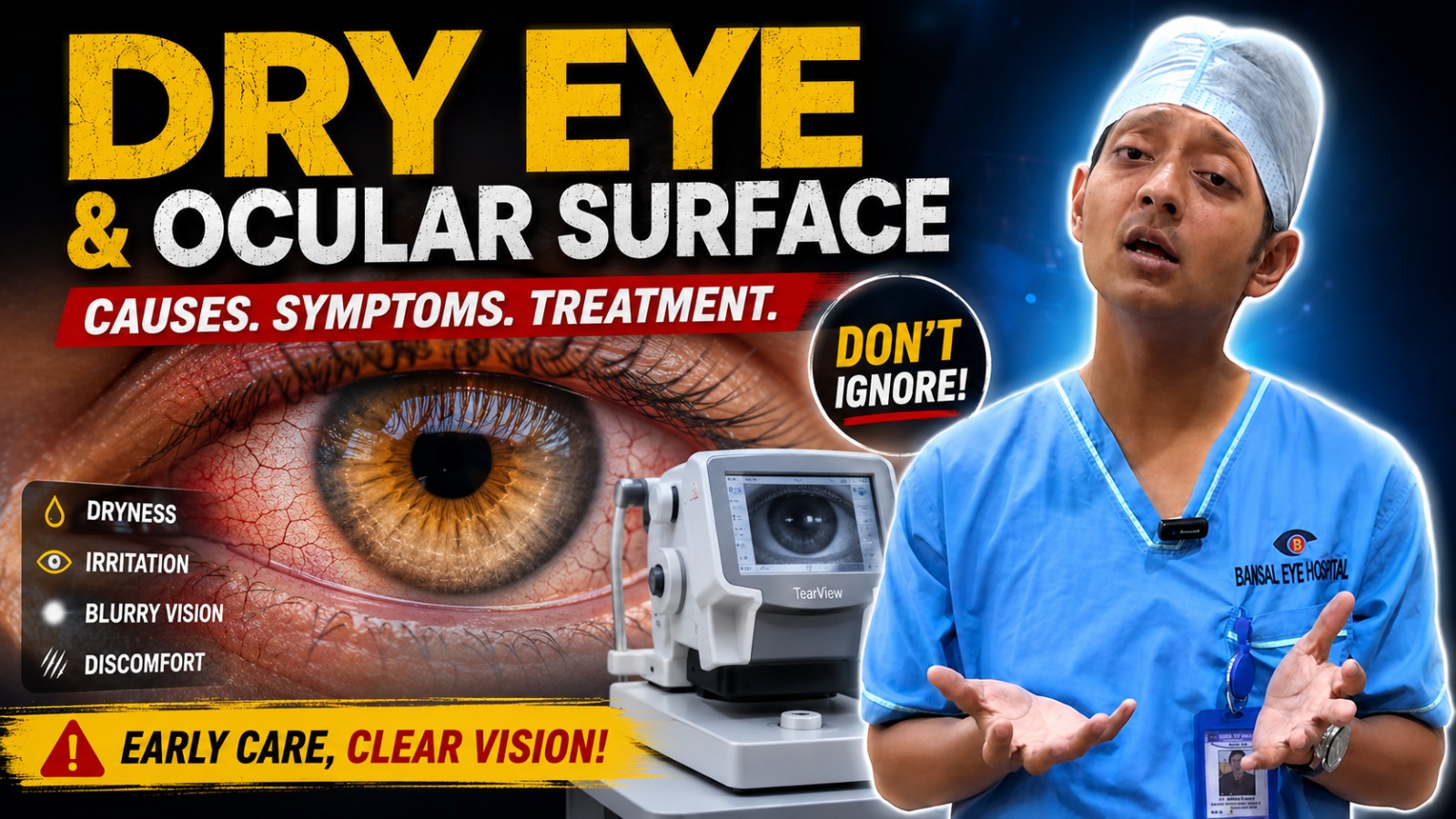
Understanding Dry Eye Disease
Dry eye is more than just irritation—it's a chronic, progressive inflammatory condition of the ocular surface that affects millions. At Bansal Eye Hospital, Ambala, we specialize in comprehensive dry eye management using advanced diagnostic tools and evidence-based treatments. Unlike temporary relief offered by over-the-counter drops, we identify and treat the root cause of your dry eye, whether it's meibomian gland dysfunction (MGD), aqueous deficiency, blepharitis, or a combination of factors.
Left untreated, chronic dry eye can lead to corneal damage, vision fluctuation, and significantly reduced quality of life. Our dedicated dry eye clinic offers personalized treatment plans that restore tear film stability, reduce inflammation, and provide long-lasting relief.
Types of Dry Eye Disease
- Evaporative Dry Eye (Most Common ~86%): Caused by meibomian gland dysfunction (MGD) where oil glands in the eyelids produce poor quality or insufficient oil, causing tears to evaporate too quickly.
- Aqueous Deficient Dry Eye: The lacrimal glands don't produce enough watery component of tears. Often associated with Sjögren's syndrome, rheumatoid arthritis, or age-related changes.
- Mixed Dry Eye: Combination of both evaporative and aqueous deficiency—the most common presentation we see in clinical practice.
- Neurotrophic Keratitis: Reduced corneal sensation leading to poor tear production and healing. Can occur after herpes infection, diabetes, or eye surgery.
- Blepharitis & Ocular Rosacea: Inflammation of eyelid margins causing redness, crusting, and secondary dry eye symptoms.
Advanced Diagnostic Technology at Bansal Eye Hospital
- Meibography: High-definition imaging of meibomian glands to visualize gland dropout, shortening, and atrophy—the hallmark of MGD.
- Tear Film Interferometry (Lipiscan): Measures the thickness of the lipid layer of tears to quantify evaporative dry eye severity.
- Tear Osmolarity Testing: Measures salt concentration in tears—elevated osmolarity is a key marker of dry eye disease.
- Matrix Metalloproteinase-9 (MMP-9) Test: Detects inflammation on the ocular surface, guiding anti-inflammatory treatment decisions.
- Schirmer's Test with Anesthesia: Measures baseline tear production after numbing the eye to eliminate reflex tearing.
- Tear Break-Up Time (TBUT): Measures how quickly tears break apart—rapid TBUT indicates evaporative dry eye.
- Corneal Staining (Fluorescein & Lissamine Green): Identifies damage to the corneal and conjunctival surface.
Comprehensive Treatment Options
🌿 Lifestyle & Environmental Modifications
- Blinking exercises and screen breaks for computer users
- Humidifiers for dry indoor environments
- Dietary modifications: Omega-3 fatty acids (flaxseed, fish oil)
- Management of environmental triggers (AC, fans, wind, smoke)
- Proper contact lens hygiene or temporary discontinuation
💧 Lubrication & Tear Replacement
- Preservative-Free Artificial Tears: For mild to moderate dry eye, used 4-6 times daily as needed
- Lipid-Based Sprays & Drops: Specifically formulated for evaporative dry eye to supplement the oil layer
- Nighttime Gels & Ointments: Thicker lubricants for overnight protection, especially for nocturnal lagophthalmos (incomplete eyelid closure during sleep)
- Autologous Serum Eye Drops: Made from patient's own blood—contains growth factors, vitamins, and anti-inflammatory proteins for severe dry eye unresponsive to conventional treatment
🔥 Anti-Inflammatory Therapy
- Cyclosporine A (Restasis, Vekacia, CsA): Reduces T-cell mediated inflammation on the ocular surface. Takes 1-3 months for full effect.
- Lifitegrast (Xiidra): LFA-1 antagonist that rapidly reduces signs and symptoms of dry eye, often within 2 weeks.
- Corticosteroid Eye Drops (Loteprednol, Fluorometholone): Short-term pulse therapy for acute flare-ups with severe inflammation.
- Oral Doxycycline or Azithromycin: Low-dose long-term antibiotics that have anti-inflammatory and MMP-inhibiting properties, especially effective for MGD and rosacea.
🛢️ Meibomian Gland Dysfunction (MGD) Specific Treatments
- Warm Compresses & Lid Hygiene: Daily routine to melt thickened meibum and clean lid margins. We demonstrate proper technique in-clinic.
- Lid Margin Debridement (BlephEx): In-office procedure that mechanically removes biofilm, scurf, and debris from lid margins.
- Intense Pulsed Light (IPL) Therapy: Delivers specific wavelengths of light to the periocular skin, reducing inflammatory mediators and improving meibomian gland function. Typically 3-4 sessions.
- Thermal Pulsation Therapy (Lipiflow, iLux): Applies controlled heat (42.5°C) to the inner eyelids with simultaneous massage to express blocked meibum. Single 12-minute treatment can provide relief for 6-12 months.
- Meibomian Gland Expression: Manual expression of gland contents by our ophthalmologist using specialized forceps or paddle.
🔌 Punctal Occlusion (Tear Preservation)
- Temporary (Collagen) Plugs: Dissolve in 4-7 days—used as a trial to determine if punctal occlusion will help.
- Semi-Permanent (Silicone) Plugs: Can remain in place for months to years. Removable if needed.
- Cautery (Punctal Closure): Permanent closure of tear drainage ducts for severe, refractory dry eye with aqueous deficiency.
🔬 Advanced & Emerging Therapies
- Amniotic Membrane Transplant (Prokera, AmbioDisk): Promotes healing of severe corneal surface damage, reduces inflammation, and decreases scarring. Placed as a temporary bandage for 1-2 weeks.
- Regenerative Eye Drops (Platelet-Rich Plasma - PRP): Concentrated growth factors from patient's own blood for neurotrophic keratitis and persistent epithelial defects.
- Scleral Contact Lenses: Large-diameter rigid lenses that vault over the cornea, creating a fluid reservoir that keeps the cornea constantly bathed in preservative-free solution. Excellent for severe dry eye, graft-versus-host disease, and neurotrophic corneas.
- Neurostimulation (TrueTear): Intranasal device that stimulates the nasolacrimal reflex to naturally increase tear production.
Who Should Be Evaluated for Dry Eye?
- Anyone experiencing persistent eye irritation, burning, or scratchiness
- Frequent contact lens discomfort or inability to wear contacts
- Patients with autoimmune diseases (Sjögren's, rheumatoid arthritis, lupus, thyroid eye disease)
- Individuals taking medications that cause dryness (antihistamines, antidepressants, diuretics, beta-blockers, acne medications)
- Post-menopausal women (hormonal changes significantly affect tear film)
- People over age 50 (tear production naturally decreases with age)
- Heavy digital device users (computer, smartphone, tablet) — over 60% experience digital eye strain with dry eye
- LASIK or cataract surgery candidates — pre-existing dry eye must be treated before surgery for optimal outcomes
- Patients with chronic blepharitis, ocular rosacea, or recurrent styes
Dry Eye & Refractive Surgery: What You Must Know
If you are considering LASIK, SILK, or cataract surgery at Bansal Eye Hospital, we perform mandatory pre-operative dry eye evaluation. Uncontrolled dry eye is the #1 cause of patient dissatisfaction after refractive surgery. We treat your dry eye BEFORE surgery to ensure you heal properly and achieve the crisp, stable vision you expect. Our "optimize before operating" protocol includes 4-8 weeks of pre-treatment, followed by surgery, then continued dry eye management post-operatively.
Frequently Asked Questions
Stop Suffering from Dry Eye
Book a comprehensive dry eye evaluation at Bansal Eye Hospital, Ambala. We identify the root cause and create a personalized treatment plan for lasting relief.